
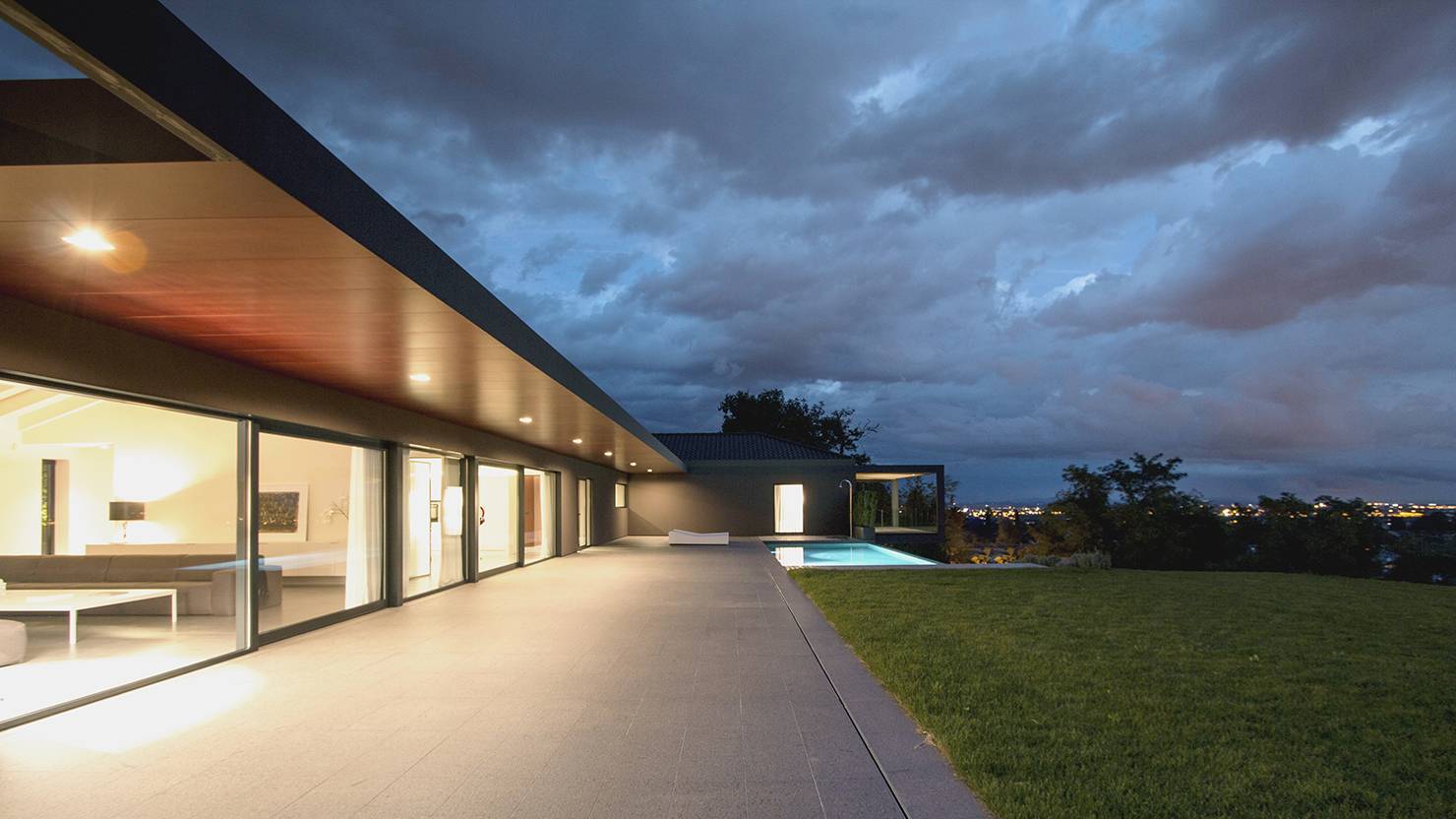
What Are Passive House Windows and Why Do They Matter
Passive House Windows Are the Highest-Performing Fenestration Available to Architects Today
When a client asks you to design to the Passive House standard, the window specification becomes one of the most consequential decisions on the entire project. Passive house windows are not simply energy-efficient glazing — they are thermally engineered assemblies that must perform as part of an integrated building envelope, controlling heat loss, solar gain, interior surface temperatures, and airtightness simultaneously. Getting this specification right separates a building that hits certification from one that misses it — and from one that keeps occupants comfortable for decades versus one that generates callbacks.
What Defines a Passive House Window
The term is precise. A passive house window must meet the thermal and airtightness thresholds defined by Passive House Institute US (PHIUS), the North American certification body that adapts Passive House methodology to North American climate zones and the IECC framework. PHIUS certification distinguishes between climate-optimized targets — what works in Climate Zone 4A (mixed-humid) is different from what works in Zone 6 (cold continental) — and window assemblies must be selected accordingly.
At the component level, a certified passive house window assembly is characterized by four features working in combination:
- Triple glazing with low-conductance spacers. Two or more low-e coatings, argon or krypton fill, and warm-edge or thermally broken spacers that suppress edge-of-glass heat loss.
- Deeply insulated or thermally broken frames. Multi-chamber uPVC profiles, thermally broken aluminum, or solid-wood-and-aluminum composite frames that prevent the frame from becoming a thermal bridge.
- Continuous air seal. The window-to-wall connection must maintain continuity with the building’s air barrier; the frame itself must be tested to exceed standard residential airtightness requirements.
- Passive House suitable or certified assembly U-value. The whole-window thermal performance — frame plus glazing, as tested per NFRC protocol — must reach Passive House suitable or certified thresholds for the project’s climate zone.
Why Frame Material and Profile Depth Matter More Than Glazing Alone
Architects sometimes focus disproportionately on the glass specification and underweight the frame. In a typical double-hung window, the frame and sash account for 20–30 percent of total unit area. In a divided-light or multi-panel wall, that fraction rises further. The frame’s thermal resistance directly limits the whole-window assembly rating reported on the NFRC label — the number that matters for IECC compliance and PHIUS submissions.
Multi-Chamber uPVC Profiles
German-manufactured and Polish-manufactured uPVC systems used in passive house windows typically run six to nine internal chambers in the frame profile, compared to three or four in standard residential vinyl. Each chamber traps still air, building up thermal resistance incrementally. Profile depths of 80 mm or greater — common in Passive House suitable tilt-turn systems — provide the thermal mass of frame cross-section needed to meet PHIUS requirements without a thermal break insert.
Thermally Broken Aluminum and Composite Systems
Where aesthetics, structural glazing details, or narrow sightlines are priorities, aluminum frames with polyamide thermal breaks and insulated sashes can reach Passive House suitable performance levels. Italian-crafted systems in this category are increasingly specified on high-design residential and commercial projects where the sightline geometry of aluminum is non-negotiable. These assemblies require careful detailing at the window-to-wall junction to prevent condensation on the interior face of the frame — a risk in Climate Zone 5 and colder.
Wood-Aluminum Composite Frames
A third category — engineered timber interior bonded to an aluminum exterior — is widely used in German-manufactured passive house windows for projects where interior warmth and durability are both required. The wood core provides excellent thermal resistance; the aluminum cladding eliminates maintenance. This system is common on multifamily and institutional passive house projects in the Northeast and upper Midwest where both aesthetics and longevity over a 50-year service life are specified.
Glazing Configuration: Triple-Glazed Is the Baseline
Triple-glazed assemblies are the standard for passive house windows in Climate Zones 4 through 8, which cover the majority of the continental US and most of Canada. The configuration — typically two low-e coatings on surfaces 2 and 5, with argon or krypton fill in both cavities — achieves whole-window thermal performance in the Passive House suitable range.
Solar heat gain coefficient (SHGC) selection requires climate-zone judgment:
- South-facing glazing in cold climates (CZ 5–7): Higher SHGC (0.45–0.60) maximizes passive solar gains to offset heating load.
- West and east exposures: Lower SHGC reduces overheating risk without meaningful heating-season penalty.
- Mixed-humid climates (CZ 3–4): PHIUS modeling often calls for lower SHGC overall to control cooling loads — passive solar gains are less valuable where cooling hours dominate.
Dynamic glazing — electrochromic or thermochromic — is an emerging specification for passive house windows on commercial projects. It allows a single orientation to serve both the heating-season high-SHGC and cooling-season low-SHGC requirements without blind systems. The technology is maturing but adds cost; its value is highest on east and west exposures of commercial passive house projects in mixed climates.
Airtightness: The Spec That Most Standard Windows Fail
Passive house windows must contribute to, not undermine, the building’s airtightness target — typically 0.6 ACH50 for PHIUS certification. Standard residential windows tested under AAMA protocols to Class A leakage are insufficient for this requirement. High-performance passive house windows use multi-point locking hardware — standard on German-manufactured and Polish-manufactured tilt-turn systems — that compresses the perimeter gasket uniformly across the full sash perimeter at every closure. The result is measurably lower air infiltration through the window unit itself.
The window-to-rough-opening connection is equally critical. Passive house window specifications typically require:
- A pre-compressed expanding foam tape (Illbruck or equivalent) at the exterior weather line
- A vapor-open membrane tape on the interior side connecting frame to air barrier
- Continuous sill drainage and back-dam detail to manage incidental water intrusion without disrupting the air seal
These details must appear in the architectural drawings, not be left to the window installer’s discretion. The window manufacturer’s installation guide — provided with every LuxHaus shipment — includes joint detail drawings specific to each frame profile depth.
Passive House Windows in the NFRC and ENERGY STAR Framework
For code submissions under IECC 2021 or the 2024 edition, window performance is reported via the NFRC label — whole-window U-factor and SHGC as tested to NFRC 100 procedures. Passive house windows from Germany, Italy, and Poland are NFRC-labeled for North American projects. ENERGY STAR Most Efficient designation, which applies in Climate Zones 4–8, requires performance that overlaps substantially with Passive House suitable thresholds, so specifying to Passive House suitable performance generally satisfies ENERGY STAR requirements simultaneously.
PHIUS project submittals require WUFI Passive or similar energy modeling software where actual tested window performance values are entered. Window IQ provides a structured comparison framework to evaluate passive house window options against your project’s climate zone targets before you commit to a specification.
Comparing Passive House Window System Types
| Frame Type | Origin | Passive House Suitable | Typical Application | Key Trade-off |
|---|---|---|---|---|
| Multi-chamber uPVC tilt-turn | Germany / Poland | Yes (6–9 chamber profiles) | Residential, multifamily | Wider sightlines than aluminum |
| Thermally broken aluminum | Germany / Italy | Yes (with high-performance break) | Commercial, high-design residential | Higher cost; condensation risk in CZ 5+ |
| Wood-aluminum composite | Germany | Yes | Multifamily, institutional | Higher unit weight; longer lead time |
| Standard double-hung vinyl | North America (typical) | No | Standard residential | Does not meet PHIUS thermal or airtightness thresholds |
Lead Times and Procurement Realities for Passive House Windows
Factory-direct passive house windows from Germany, Italy, and Poland carry lead times that reflect both manufacturing precision and transatlantic logistics. Plan for 12–18 weeks from confirmed order to site delivery for standard configurations; custom sizes, specialty glazing, or large-format fixed lights add time. For projects with a defined substantial completion date, window procurement should be initiated at design development, not at permit issuance. LuxHaus works directly with project teams during DD to confirm sill heights, rough opening dimensions, and performance specifications before shop drawings are issued — reducing RFI cycles during construction.
Why Passive House Windows Perform Differently Than Standard High-Efficiency Units
Interior Surface Temperature and Occupant Comfort
The difference between a Passive House suitable window and a code-minimum double-pane unit is most felt, not read on a spec sheet. Interior glass surface temperatures on triple-glazed passive house windows in winter conditions remain close to room air temperature — typically within 4–6°F of indoor setpoint. Standard double-pane units can run 15–20°F colder than room air, creating radiant asymmetry that occupants perceive as drafts even with no infiltration. For residential architects designing living spaces with large glazing areas, this distinction directly affects the usability of rooms adjacent to the glass line.
Condensation Resistance
Cold interior surface temperatures also drive condensation on standard windows in high-occupancy or high-humidity environments — multifamily, schools, healthcare. Passive house windows, by maintaining interior surface temperatures above the dew point of normally conditioned interior air, eliminate the condensation risk that generates mold claims and finish damage. NFRC condensation resistance (CR) ratings above 70 are common for Passive House suitable assemblies.
Specifying Passive House Windows: Practical Checklist
- Confirm PHIUS climate zone targets for the project location before selecting glazing configuration
- Specify whole-window NFRC U-factor and SHGC, not center-of-glass values
- Require PHIUS-recognized or Passive House suitable certification documentation from the manufacturer
- Detail the window-to-wall airtightness connection on the drawings — tape type, sequence, and overlap dimensions
- Coordinate sill drainage and back-dam detail with the waterproofing specification
- Confirm multi-point locking hardware is standard on the specified unit — not an upgrade
- Initiate procurement at design development; confirm RO dimensions before permit
The Role of Passive House Windows in a High-Performance Project
Passive house windows are not an isolated product decision. They are a node in an integrated system: the thermal envelope, the air barrier, the mechanical ventilation strategy, and the energy model all interact with the window specification. Selecting Passive House suitable or certified assemblies from Germany, Italy, or Poland provides the thermal and airtightness baseline the rest of the system depends on. Downgrading the window specification to reduce first cost typically shifts cost to mechanical systems and sacrifices occupant comfort outcomes that the client expects from a high-performance project.
If you are developing a passive house window specification for a current project and want a performance-matched product recommendation, Ask Emma, LuxHaus’s 24/7 AI advisor, to walk through your climate zone, orientation, and target certification level right now.