
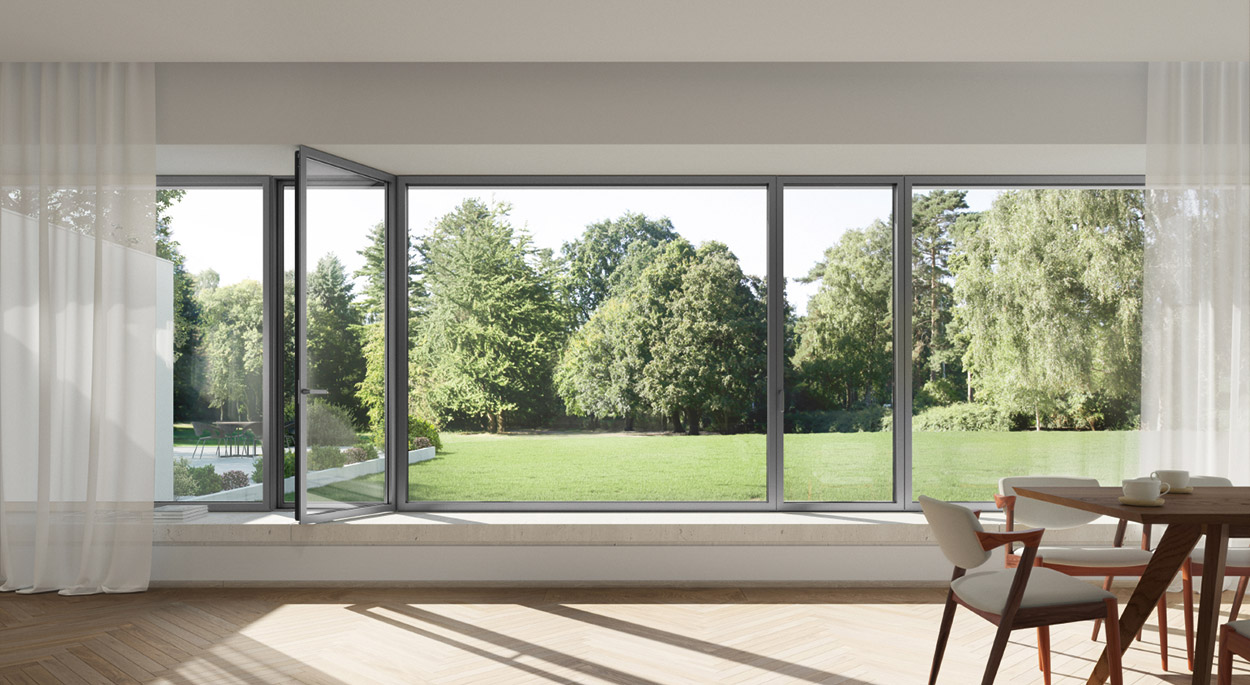
Window IQ: HVAC Cost Modeling for New Builds
Window IQ HVAC Cost Modeling Starts Before the Design Is Frozen
Window IQ HVAC cost modeling for new builds gives architects a concrete number — estimated annual heating and cooling expenditure — before a single detail drawing is issued. Most project teams wait until the mechanical engineer runs their load calculations to discover that the glazing specification has quietly inflated the HVAC plant size. By then, swapping systems is expensive and changing the window spec feels like going backward. Window IQ short-circuits that sequence. It puts thermal performance data into the architect’s hands at the schematic phase, when changes are still cheap.
Why HVAC Load and Window Spec Are Inseparable
Fenestration is typically 20 to 40 percent of a building’s thermal envelope, depending on glazing area and orientation. On a new build with large vision glass — a mixed-use podium, a high-performance residential project, a corporate campus building — the window assembly directly determines peak heating load in Climate Zone 5 and above, and peak cooling load in Zones 1 through 4. A mechanical engineer sizing equipment for a worst-case envelope ends up specifying larger air handlers, more ductwork, and higher first-cost mechanical systems than a well-specified envelope actually requires. The downstream effect shows up in the owner’s energy bills for the life of the building.
The Load Calculation Gap Architects Often Miss
ASHRAE 90.1 and the IECC both prescribe minimum fenestration performance by climate zone, but meeting the prescriptive minimum is not the same as optimizing for HVAC efficiency. A code-minimum double-pane assembly in Climate Zone 6 passes compliance but may allow enough heat loss to drive a heating system 15 to 25 percent larger than a triple-glazed Passive House suitable assembly would require. Window IQ HVAC cost modeling surfaces that gap in BTU terms — not abstract performance metrics.
What Window IQ Actually Models
Window IQ is a free browser-based tool built specifically for architects and builders evaluating window specifications on active projects. It does not require a software license, an account, or a download. You enter project parameters — climate zone, gross glazing area, orientation split, and occupancy type — and the tool calculates comparative energy loads and estimated annual HVAC operating costs across window performance tiers. The output is a side-by-side performance gap report that translates thermal assembly differences into dollars per year.
Inputs That Drive the Window IQ HVAC Cost Model
- Climate zone: IECC Climate Zones 1 through 8, mapped to your project’s county or postal code. The zone determines heating degree days, cooling degree days, and the weighting between conductive loss and solar gain.
- Glazing area and orientation: Total fenestration square footage broken down by cardinal orientation. South-facing glass in Zone 5 behaves differently from north-facing glass in the same zone — the model accounts for both.
- Frame and glazing assembly tier: You compare a baseline specification (often the code-minimum or the value-engineered option the contractor is pushing) against a high-performance specification — for example, a German-made tilt-turn triple-glazed system with thermally broken frames, or an Italian-crafted casement with Passive House suitable certification.
- Local energy cost: The tool uses current regional utility averages but allows manual override for projects where the owner has a firm energy rate from the utility.
Window IQ HVAC Cost Output: Reading the Report
The Window IQ output presents three numbers that matter in a project conversation. First, annual estimated HVAC operating cost under the baseline specification. Second, annual estimated HVAC operating cost under the upgraded specification. Third, the cumulative 10-year and 20-year cost difference, which becomes the economic argument for the upgrade. On a 10,000-square-foot residential project in Climate Zone 6 with 30 percent glazing coverage, the spread between a code-minimum double-pane assembly and a triple-glazed Passive House suitable system routinely runs to tens of thousands of dollars over a typical mortgage term — a number that reframes the window budget conversation entirely.
Using the Report in a Client or Design Team Meeting
The Window IQ performance gap report is formatted to be shared. Export it as a PDF and drop it into the OAC meeting agenda. The one-page summary gives the owner a cost-benefit framing in familiar terms — annual operating dollars, not thermal transmittance values. It gives the mechanical engineer a justification for right-sizing equipment rather than over-specifying for a worst-case envelope. And it gives the architect documented reasoning for a specification decision that might otherwise look like an arbitrary preference for premium product.
Passive House Suitable Specifications and HVAC Sizing
Passive House suitable or certified window assemblies — triple-glazed units with insulated frames and warm-edge spacers — are increasingly specified on new builds outside formal Passive House certification projects. Developers and architects use them as a mechanical-offset strategy: a higher window budget reduces the HVAC plant budget, simplifies the mechanical system, and in some cases eliminates the need for dedicated perimeter heating entirely. Window IQ HVAC cost modeling makes that trade-off legible. It does not require the project to pursue Passive House certification; it simply uses Passive House suitable performance as a benchmark tier in the comparison.
- Triple-glazed assemblies with insulated frames reduce conductive heat loss through the window by a significant margin compared to standard double-pane units — the difference registers in reduced heating plant capacity requirements.
- Low-solar-gain coatings on south and west exposures in Zones 1 through 4 reduce peak cooling load, which directly affects chiller sizing and ductwork dimensions.
- Airtight window installation — a factor in both German-manufactured tilt-turn systems and Polish-manufactured parallel-slide units — eliminates infiltration loads that generic double-pane assemblies with standard installation tolerate.
ENERGY STAR and NFRC Labeling in the Cost Model
Window IQ references ENERGY STAR Most Efficient and NFRC-certified performance tiers when framing the baseline comparison. ENERGY STAR program requirements vary by climate zone — a window that qualifies in the Southern zone may not meet the Northern zone threshold. The IRC 2024 residential code cross-references NFRC certification as the required performance verification method for fenestration in prescriptive compliance paths, so any window assembly entered into Window IQ that carries NFRC labeling feeds directly into a code-compliant specification framework. That alignment matters when the project is going through plan review and the building official asks for fenestration compliance documentation.
Comparing Window IQ to a Manual Load Calculation
| Factor | Manual Load Calc (MEP) | Window IQ HVAC Cost Model |
|---|---|---|
| Stage of use | Design development or CD phase | Schematic through DD — any phase |
| Time to result | Hours to days, requires MEP input | Under 10 minutes, self-serve |
| Output format | Engineering report with equipment schedules | Cost gap summary, PDF export |
| Primary user | Mechanical engineer | Architect, project manager, owner |
| Cost to run | Billable MEP hours | Free |
| Spec comparison | Single spec modeled at a time | Side-by-side tier comparison |
Window IQ is not a substitute for a full ASHRAE Manual J or energy model on a complex project. It is a decision-support tool for the phase when the architect still controls the specification. Once the Window IQ report identifies a meaningful cost gap, the MEP can run the detailed calculation with a confirmed window spec — which saves time and avoids late-stage redesign.
How to Use Window IQ in Your Workflow
If you have not used it before, the step-by-step guide to using Window IQ for window performance comparison walks through the input sequence and explains how to interpret each output field. For teams starting from scratch on what high-performance fenestration actually means for their project type, the Window IQ performance gap calculator introduction covers the methodology and the logic behind the tier structure.
Practical Window IQ HVAC Cost Workflow for New Builds
- Run Window IQ at the end of schematic design, once glazing area and orientation are set but before the mechanical engineer starts load calculations.
- Model two scenarios: the specification you would default to under value engineering pressure, and the specification you actually want to specify for performance reasons.
- Share the cost gap report with the owner and the MEP simultaneously — frame it as a system-sizing input, not a product pitch.
- Use the 20-year cumulative figure to anchor a conversation about first cost versus lifecycle cost. On most projects above $2 million in construction value, the lifecycle math closes the gap between tiers within 7 to 12 years.
Window IQ HVAC Cost Modeling Across LuxHaus Product Lines
LuxHaus sources high-performance windows and doors from manufacturers in Germany, Italy, and Poland. Each product line maps to a distinct performance tier within Window IQ. German-manufactured tilt-turn systems with multi-chamber profiles sit at the top of the heating-climate performance range. Italian-crafted casement and lift-slide systems offer optimized solar control packages suited to mixed and cooling-dominated climates. Polish-manufactured systems provide Passive House suitable performance at a price point that works on mid-market new builds where the glazing budget is under pressure. Window IQ lets you model all three tiers against your specific project parameters before committing to a specification — so the choice is data-driven, not catalog-driven.
Window IQ HVAC cost modeling is one of the few tools in an architect’s schematic-phase toolkit that converts a thermal specification decision into an owner-legible financial argument. Use it early, share the output, and let the numbers do the work.
Use Window IQ to calculate the energy savings for your project — free.