
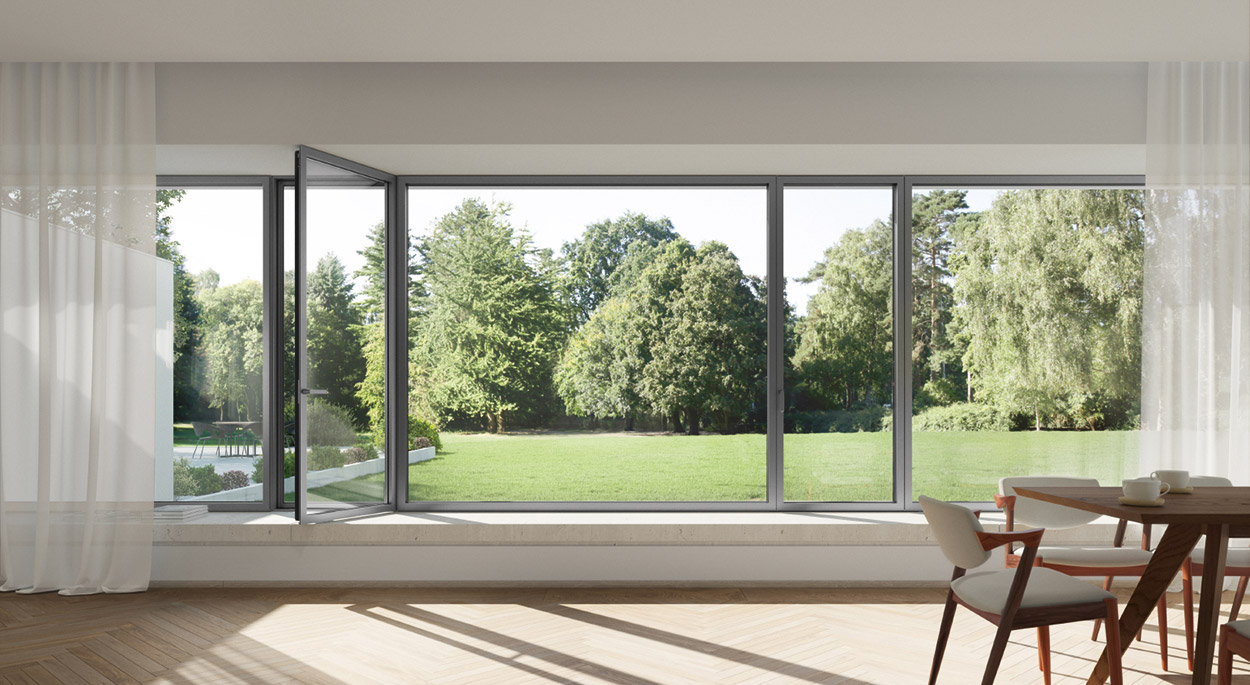
The Rise of Passive House Construction in North America
Passive House Construction in North America Has Moved Past the Fringe
Passive house construction in North America is no longer a niche pursued by a handful of high-minded practitioners — it is a delivery method gaining serious traction with developers, municipal procurement offices, and institutional clients who want buildings that perform predictably for decades. For architects, that shift has a direct consequence: window and door specifications on passive house projects are now subject to a level of thermal scrutiny that standard code-minimum assemblies simply cannot meet. Understanding the standard, the certification pathway, and the envelope components that make or break certification is now a core competency, not an elective.
What the Passive House Standard Actually Requires
The passive house standard is an energy modeling methodology, not a checklist of materials. It sets quantified annual energy demand limits — for heating, cooling, and primary energy — that the whole building assembly must hit through modeling before construction starts and verified testing after. In North America, the dominant certification body is Passive House Institute US (PHIUS), which publishes climate-specific targets calibrated to North American weather data, as opposed to the single European threshold many architects encounter in imported literature. PHIUS certification is now recognized in a growing list of state and municipal incentive programs, and several jurisdictions are beginning to reference passive house performance tiers in updated energy codes.
Why Passive House Construction in North America Is Accelerating
Code Trajectories Are Pushing Toward Passive Performance
The 2021 and 2024 IECC cycles have tightened fenestration requirements across Climate Zones 4 through 7, and several states — including Massachusetts, Washington, and New York — have adopted stretch codes that push permitted fenestration performance well beyond the base IECC floor. Passive house construction in North America sits at the logical endpoint of that trajectory. Architects who learn to work at passive house performance levels today are ahead of where code will be in the next cycle.
Developer Demand Is Shifting
Multifamily developers in gateway cities are discovering that passive house certification reduces HVAC plant size, cuts operating costs, and improves marketability to tenants who pay attention to utility bills. That economic case, rather than environmental ideology, is driving adoption in the mid-rise sector. Single-family custom projects are following a similar logic: high-net-worth clients who commission million-dollar homes increasingly want buildings that are demonstrably efficient, not just ENERGY STAR labeled.
The Fenestration Problem in Passive House Projects
Windows are the most thermally vulnerable element in any building envelope. On a standard code-compliant project, that vulnerability is managed by limiting window-to-wall ratio and using ENERGY STAR certified assemblies. On a passive house project, the same approach is insufficient. The modeling is unforgiving: a single large glazed elevation facing northwest in Climate Zone 6 can undermine an entire energy budget if the assembly’s thermal resistance is inadequate.
What Passive House Construction in North America Demands from Windows
Passive house suitable fenestration requires, at minimum, triple-glazed insulated glass units with warm-edge spacers, thermally broken or fully insulated frame profiles, and low-emissivity coatings tuned to the orientation and climate zone. These are not theoretical requirements — they are what the energy model needs to close. German-manufactured tilt-turn systems and Polish-manufactured multi-chamber profiles have been engineered around these constraints for decades. Italian-crafted casement and lift-slide systems bring the same thermal discipline to larger glazed openings common in contemporary residential and mixed-use work. All three origins supply assemblies that are Passive House suitable or certified under PHIUS and PHI protocols.
- Frame depth and insulation continuity: Passive house construction in North America requires frames with sufficient depth to carry insulation across the rough opening, eliminating the thermal bridging that undermines edge-of-glass performance.
- Air infiltration: Passive house projects target air leakage rates verified by blower door testing. Window and door gaskets, compression seals, and hardware must maintain those rates across decades of thermal cycling.
- Installation interface: The connection between the window frame and the wall assembly — airtight, vapor-managed, thermally continuous — is as important as the unit’s own performance. Frame extension profiles and integrated flashing systems are specification items, not afterthoughts.
NFRC Labeling and What It Does Not Tell You
NFRC labeling is mandatory on most North American fenestration products and provides a standardized basis for comparing whole-unit thermal performance. It is a useful floor. But NFRC ratings are calculated under standardized conditions that do not account for installation quality, thermal bridging at the rough opening, or the interaction of the frame with a thick-wall passive house assembly. Architects specifying for passive house construction in North America need to look past the label and evaluate the full system: frame profile geometry, glazing spacer type, gasket system, and the manufacturer’s installation documentation for continuous insulation interfaces.
Comparing Window System Tiers for Passive House Projects
| Performance Tier | Typical Glazing | Frame Thermal Performance | Passive House Suitability | Typical Application |
|---|---|---|---|---|
| Code Minimum | Double-pane, standard LoE | Minimal thermal break | Not suitable | Spec residential, light commercial |
| High Performance | Double-pane, enhanced LoE + argon | Thermally broken aluminum or fiberglass | Climate-zone dependent | ENERGY STAR projects, CZ 2–4 |
| Passive House Suitable | Triple-pane, LoE + krypton/argon | Deep insulated frame, warm-edge spacer | PHIUS / PHI certifiable | CZ 4–7 passive house, high-performance residential |
| Passive House Certified | Triple-pane, certified glazing package | PHI-component-certified frame | Certified component | Passive house certification required by contract |
Passive House Construction in North America Across Climate Zones
Passive house construction in North America spans an extraordinary range of climate conditions — from the humid subtropical zones of the Gulf Coast to the heating-dominated subarctic zones of the upper Midwest and Canadian provinces. The PHIUS climate-specific targets reflect that diversity, and so must the fenestration specification. A triple-glazed assembly optimized for a cold climate in Minneapolis may require a different glazing package than one specified for a mixed-humid project in Nashville. Solar heat gain coefficient selection, in particular, is orientation- and climate-sensitive: south-facing glazing in a heating-dominated climate benefits from higher SHGC to contribute passive solar gains; the same specification on a west-facing elevation in a cooling-dominated climate becomes a liability.
- Climate Zones 5–7 (Northern US, Canada): Heating load dominates. Triple glazing with high thermal resistance and moderate-to-high SHGC on south elevations is standard practice.
- Climate Zones 3–4 (Mid-Atlantic, Pacific Northwest, Mountain West): Mixed heating and cooling loads. SHGC balance across orientations becomes a modeling exercise, not a rule of thumb.
- Climate Zones 1–2 (Gulf Coast, Southwest): Cooling load dominates. Passive house in these zones focuses on solar control; triple glazing remains relevant for air infiltration and acoustic performance even where heating demand is low.
The Specification Workflow for Passive House Projects
The sequence matters. Window and door specifications should be locked before the energy model is submitted for PHIUS precertification review — not finalized after construction documents are nearly complete. This means obtaining certified or certifiable product data from the manufacturer early in schematic design, running orientation-specific glazing scenarios in the PHIUS WUFI Passive or similar modeling tool, and coordinating the installation interface with the structural engineer and wall assembly designer simultaneously. Architects who treat fenestration as a late-stage spec decision routinely encounter modeling failures that require expensive product substitutions or wall assembly revisions. For an in-depth look at how specification technology is changing this workflow, see how AI is changing window specification for architects.
How to Evaluate Manufacturers for Passive House Suitability
Documentation and Certification Evidence
Ask for PHIUS component certification records or PHI component database listings. A manufacturer that cannot produce these for their passive house suitable product line is self-certifying performance claims. German-manufactured systems from established profiles manufacturers have extensive third-party test records. Polish-manufactured systems engineered for the passive house market follow the same rigor. Italian-crafted lift-slide and tilt-turn systems are increasingly PHIUS-certifiable as the North American market matures.
- Request the full component data sheet, not just the marketing summary.
- Confirm that NFRC ratings are available for the specific configuration — size, glazing package, frame depth — you intend to specify.
- Verify that the manufacturer can supply installation documentation compatible with your wall assembly type (exterior insulation, double-stud, structural insulated panel, mass timber).
Passive House Construction in North America: Where the Market Goes Next
Passive house construction in North America is entering a phase of institutional adoption. Multi-family affordable housing authorities in New York, California, and British Columbia are writing passive house requirements into RFPs. School districts and healthcare systems are commissioning passive house feasibility studies for capital projects. The window and door assemblies that serve these projects must be documentable, replicable, and supported by manufacturers with North American technical representation. Specifying from catalogs of untested or unverified products is no longer viable on passive house projects where certification is contractually required. Architects who build reliable supply relationships now — with manufacturers whose products have an established certification track record — will have a structural advantage as passive house volume grows. For a wider view of where the fenestration market is heading, high-performance windows in 2026: key trends to watch covers the forces shaping the next specification cycle. To model the energy impact of a specific fenestration assembly on your current project, Window IQ provides a free performance calculation tool calibrated to North American climate zones.
Submit your plans to LuxHaus for a performance review and quote.