
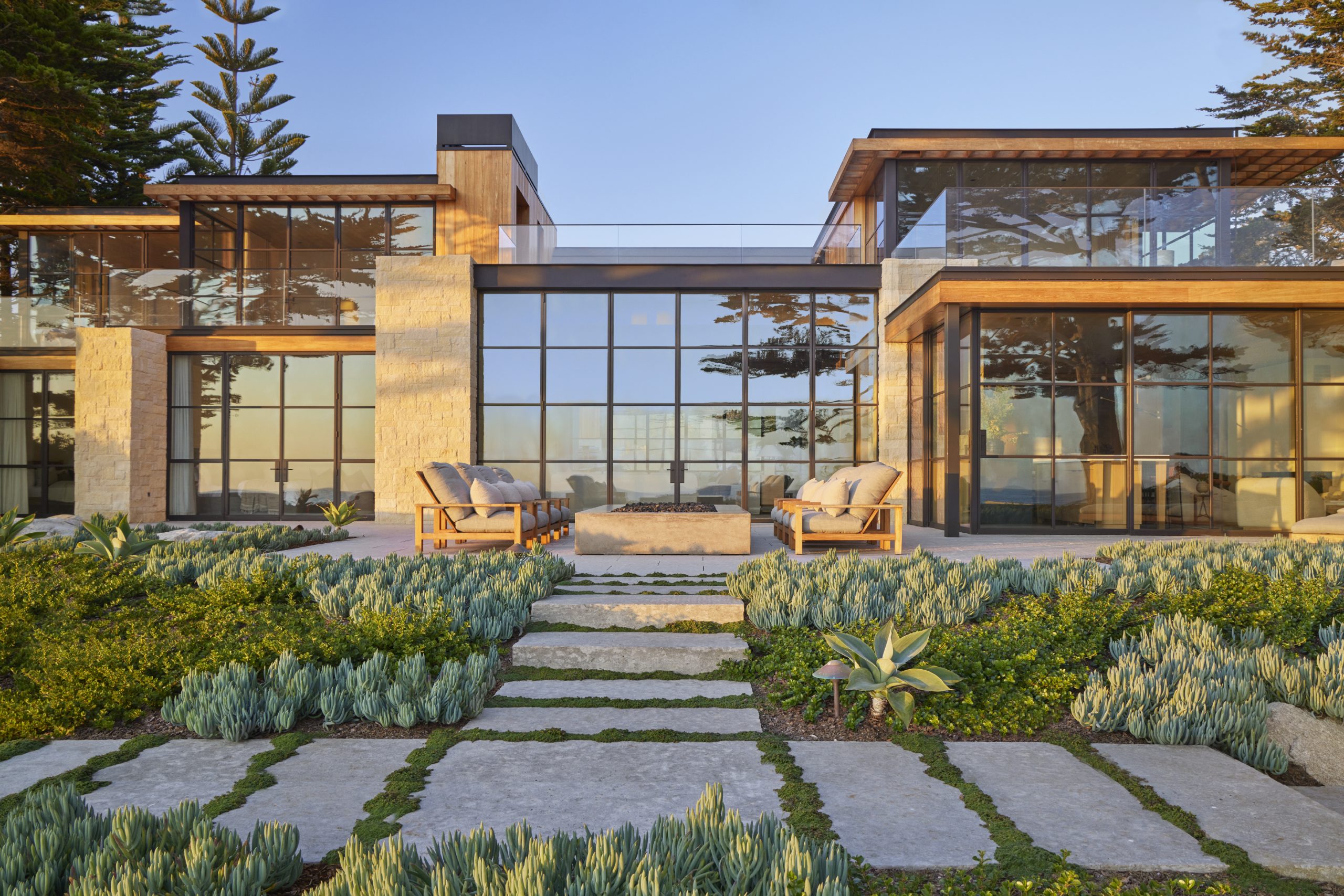
Windows for Multifamily Residential Buildings
High-performance windows from LuxHaus address the core multifamily specification failure: performance gaps locked in at the design stage. With center-of-glass Ug as low as 0.40 W/m²K, SHGC as low as 0.11, triple EPDM seals, and 5–7 multi-point locks, LuxHaus systems manufactured in Germany, Italy, and Poland deliver envelope integrity at the frame, sash, and glazing level across every climate zone.
Why Windows Multifamily Residential Projects Get Wrong — and How to Fix It at the Spec Stage
Windows multifamily residential decisions are made too early in the design process and revised too late. By the time a developer is reviewing value-engineering proposals in construction documents, the performance gap between what was specified and what gets built has already widened. The cost of that gap shows up in energy audits, tenant complaints, and HVAC oversizing — not in the bid tab. This guide walks through the specification decisions that actually matter for multifamily: envelope performance tiers, frame and glazing strategy by climate zone, acoustic requirements, hardware durability, and the procurement questions that separate a viable factory-direct supplier from one that creates schedule risk.
The Multifamily Envelope Is Not the Same as Single-Family
Developers who have specified windows multifamily residential projects know the stack of constraints is different. Individual unit occupancy creates conflicting thermal loads across a single floor plate. Corridors, mechanical rooms, and stairwells introduce non-conditioned buffer zones that affect edge-of-glazing condensation risk. And because multifamily buildings are typically occupied by renters — not owners — long-term durability and low maintenance matter more than they do in a luxury custom home where the owner controls the care schedule.
- Occupancy density: Higher internal gains mean cooling loads often dominate even in cold climates — glazing solar heat gain coefficient (SHGC) matters as much as thermal resistance.
- Stack effect: In mid-rise and high-rise multifamily, air infiltration through window frames and sash seals compounds across dozens of units. Hardware compression seals and multi-point locking are not amenities — they are envelope integrity.
- Code exposure: Multifamily projects typically trigger commercial energy codes (ASHRAE 90.1 or IECC commercial provisions) at three stories or above, not the residential IECC path. Confirm this with your energy consultant before spec is locked.
Climate Zone Strategy for Windows Multifamily Residential
IECC climate zones 1 through 8 have meaningfully different requirements for fenestration, and the dominant cost driver shifts as you move north. Getting this wrong at the spec stage for a windows multifamily residential project means either paying for performance you cannot use or falling short of code compliance on an occupied building.
Zones 1–3: Solar Control Is the Priority
In hot-humid and hot-dry climates — South Florida, the Gulf Coast, Phoenix, Southern California — the primary window performance task is limiting solar gain without sacrificing daylighting. Double-glazed assemblies with low-SHGC coatings and thermally broken aluminum or uPVC frames typically satisfy code. Triple glazing is often unnecessary and adds weight load without meaningful cooling-season benefit. Specify NFRC-labeled products so you can document compliance under ASHRAE 90.1 fenestration trade-off paths.
Zones 4–6: The Balanced Performance Band
Mid-Atlantic, the Midwest, and Pacific Northwest projects sit in the zone where both heating and cooling season performance matter. Triple-glazed assemblies with insulated frames — the kind used in Passive House suitable construction — deliver meaningful heating-season energy reduction while still controlling summer solar gain with appropriate low-e coating selection. For a 200-unit project in Chicago or Seattle, the delta in annual BTU load between a code-minimum window and a Passive House suitable assembly is large enough to right-size HVAC and recoup cost in reduced mechanical equipment.
Zones 7–8: Passive House Suitable Performance Is Table Stakes
In northern Minnesota, Alaska, and comparable Canadian climates, triple-glazed assemblies with insulated frames and warm-edge spacers are the only rational specification for a windows multifamily residential project that intends to meet energy budgets. Frame psi values and edge-of-glass condensation resistance factor (CRF) become specification line items, not afterthoughts. Projects pursuing Passive House new construction certification in these climates will find that the certified window assembly is the shortest path to envelope compliance.
Frame Materials: What Multifamily Actually Needs
Frame material selection for multifamily differs from single-family because volume, maintenance access, and unit-count durability change the calculus. Here is how the main options compare in a multifamily context.
| Frame Material | Thermal Performance | Maintenance Burden | Typical Multifamily Use Case |
|---|---|---|---|
| uPVC (unplasticized PVC) | High — inherently insulating, no thermal break required | Very low — no painting, no corrosion | Low-rise to mid-rise, budget-sensitive, zones 4–8 |
| Aluminum with thermal break | Moderate to high depending on break width and fill | Low — anodized or powder-coated finishes are durable | High-rise, curtain wall integration, zones 1–5 |
| Timber-aluminum composite | Very high — timber core with aluminum cladding exterior | Low exterior, moderate interior (depends on finish) | Luxury multifamily, amenity units, high-visibility façades |
| Fiberglass (pultruded) | High — low conductivity, dimensionally stable | Low | Premium mid-rise, high-performance retrofits |
Glazing Specifications That Affect Tenant Experience
In windows multifamily residential projects, glazing decisions have a direct impact on tenant comfort perception — and tenant retention. Sound transmission, glare control, and condensation on interior glass surfaces are the three most common complaints that trace back to an under-specified window assembly.
- Sound transmission class (STC): Triple-glazed assemblies with asymmetric glass lites (for example, 4mm/16mm argon/6mm) perform significantly better acoustically than matched-thickness double-glazed units. For projects near airports, rail corridors, or urban arterials, specify STC alongside thermal performance — not as an afterthought.
- Interior condensation: Condensation on the interior surface of the inboard glass lite indicates that the surface temperature is falling below the dew point of indoor air. Warm-edge spacers and insulated frame cavities reduce this risk. For multifamily buildings with humidified corridors or high-occupancy units, condensation resistance factor (CRF) is a specification line item worth tracking.
- Glare and visual comfort: SHGC and visible light transmittance (VLT) are independent variables. A low-SHGC coating that also suppresses VLT creates a dim, cave-like interior in south and west exposures. Specify both values explicitly, not just SHGC.
Hardware and Operability at Scale
A 150-unit building has potentially 600 or more operable sash. Hardware failure rate matters at that volume. German-made tilt-turn hardware — the same multi-point locking mechanism used in residential construction in central Europe for decades — is specified in cycle counts: 10,000, 20,000, or 50,000 open-close cycles depending on the product tier. For a multifamily building with a 30-year service life, hardware cycle ratings are a direct proxy for maintenance cost. Tilt-turn operability also provides a code-compliant egress configuration (turn position) and a ventilation position (tilt) that does not require screen infrastructure or create a fall hazard in occupied units above grade.
ENERGY STAR and WELL Certification Alignment
Multifamily developers pursuing ENERGY STAR Multifamily New Construction certification will find that fenestration is one of the more straightforward compliance paths — provided NFRC-labeled products are specified from the start. Products without NFRC labeling cannot be used in ENERGY STAR documentation, regardless of how the manufacturer describes their performance. For projects also targeting occupant wellness certifications, the WELL Building Standard includes daylighting and glare control requirements under its Light concept that directly reference glazing selection. Specifying windows multifamily residential assemblies with documented VLT and SHGC values from the outset simplifies WELL documentation considerably. For projects where Passive House certification is on the table, the overlap between WELL daylighting requirements and Passive House thermal comfort requirements makes a triple-glazed, high-VLT assembly the natural specification anchor — see the LuxHaus guide to Passive House new construction windows for specification detail on that path.
Procurement Considerations for Developers
Windows multifamily residential procurement differs from single-family in lead time, coordination, and substitution risk. A factory-direct supply model — sourcing finished window and door systems from Germany, Italy, or Poland — typically requires 12 to 20 weeks from order to delivery for custom-sized units. That lead time needs to be designed into the construction schedule, not discovered during submittal review.
- Submittal packages: Require NFRC certificates, AAMA or equivalent test reports, and finish warranty documentation as part of the submittal, not after approval.
- Substitution clauses: If your GC’s subcontract permits substitution of specified windows, define the performance floor explicitly in the spec: minimum glazing configuration, minimum frame material class, NFRC labeling required. Vague specs invite substitution to the lowest-cost unit that fits the rough opening.
- Rough opening coordination: Factory-direct high-performance windows and doors use different frame depth profiles than commodity aluminum windows. Coordinate with the structural framing subcontractor and the waterproofing consultant before rough openings are set. Retrofit correction of a rough opening on a mid-rise building is expensive.
- Energy modeling input: Your mechanical engineer needs documented NFRC values for the energy model. Get these from the window supplier before schematic design is complete — not during construction documents.
Windows Multifamily Residential: Specification Checklist
Before locking fenestration spec for a multifamily project, confirm these items are addressed:
- Climate zone confirmed; applicable energy code path identified (residential vs. commercial IECC provisions)
- NFRC-labeled products specified; values fed into energy model
- SHGC and VLT both specified per orientation, not just thermal resistance
- STC rating documented for units adjacent to noise sources
- Hardware cycle rating specified for operable units
- Frame depth and rough opening dimensions coordinated with structural and waterproofing
- Lead time confirmed and inserted into master schedule
- Substitution language in subcontract defines performance floor, not just product name
When to Evaluate Premium Windows Multifamily Residential Assemblies
Not every multifamily project justifies a Passive House suitable triple-glazed assembly. But the breakeven analysis shifts significantly when you account for HVAC right-sizing, long-term maintenance reduction, and the growing share of tenants who treat energy costs as a lease decision factor. For projects in climate zones 5 and above, or any project pursuing ENERGY STAR, LEED, WELL, or Passive House certification, the premium assembly is worth modeling against the code-minimum alternative before value-engineering it out. The window specification framework used for luxury custom homes — where performance per dollar is scrutinized carefully — applies equally to the amenity and penthouse units of a high-end multifamily development.
Sourcing High-Performance Windows for Multifamily Projects
LuxHaus sources window and door systems exclusively from manufacturers in Germany, Italy, and Poland — all of whom produce assemblies tested to the performance tiers multifamily developers need for ENERGY STAR, Passive House suitable, and WELL-aligned projects. The factory-direct model eliminates the distributor markup that typically makes premium imported windows cost-prohibitive at multifamily volume, and the digital-first procurement process is designed to fit a developer’s submittal and schedule workflow rather than a retail showroom model. You can use Window IQ to model energy performance and compare assembly options for your specific climate zone and project type before committing to a specification.
Submit your plans to LuxHaus for a performance review and quote.
Frequently Asked Questions
What glazing performance specs should a multifamily developer require at the CD stage?
At minimum, require documented whole-window U-values, SHGC, and STC ratings — not just center-of-glass figures. LuxHaus triple-pane IGUs achieve a center-of-glass Ug as low as 0.40 W/m²K and a whole-window U-value as low as 0.14–0.18 Btu/h·ft²·°F, with SHGC as low as 0.11 and over 400 glazing configurations to match climate zone requirements. NFRC and ENERGY STAR documentation is available on request.
How do triple-pane windows affect multifamily acoustic performance compared to standard domestic units?
Triple-pane high-performance window systems with laminated glazing and triple EPDM seals routinely achieve STC ratings of 42–50+ dB, compared to 26–34 dB for typical domestic windows. For multifamily projects near transit corridors, highways, or airports, that delta is the difference between a compliant acoustic envelope and chronic tenant complaints that drive turnover and HVAC complaints.
Why do multifamily projects above three stories need to reference commercial energy codes rather than residential IECC?
Buildings three stories and above typically fall under ASHRAE 90.1 or the IECC commercial provisions, which impose stricter fenestration U-value and SHGC requirements than the residential path. ENERGY STAR v7.0 Northern Zone requires a whole-window U-value of 0.22 or below; Southern Zone requires SHGC of 0.23 or below. Confirm the applicable code path with your energy consultant before locking the window specification.
How does LuxHaus pricing compare to premium domestic triple-pane brands for a multifamily package?
LuxHaus factory-direct pricing is typically 10–20% below the premium domestic triple-pane tier on a per-opening basis. Residential-scale packages typically range from $100K to $500K. Because LuxHaus ships direct from manufacturing facilities in Germany, Italy, and Poland, the savings come from eliminating domestic distributor margin, not from reducing system performance.
What does the LuxHaus procurement and delivery process look like for a 100+ unit multifamily project?
Lead time runs 12–16 weeks from shop-drawing approval. A preliminary estimate is available within about a week of submitting opening schedules. For projects with 20 or more openings, a LuxHaus project manager is on-site for every container delivery and remains on-site for 1–2 weeks to oversee installation sequencing. IGU seal warranty is 10 years, hardware 10 years, and frame finish 20+ years.