
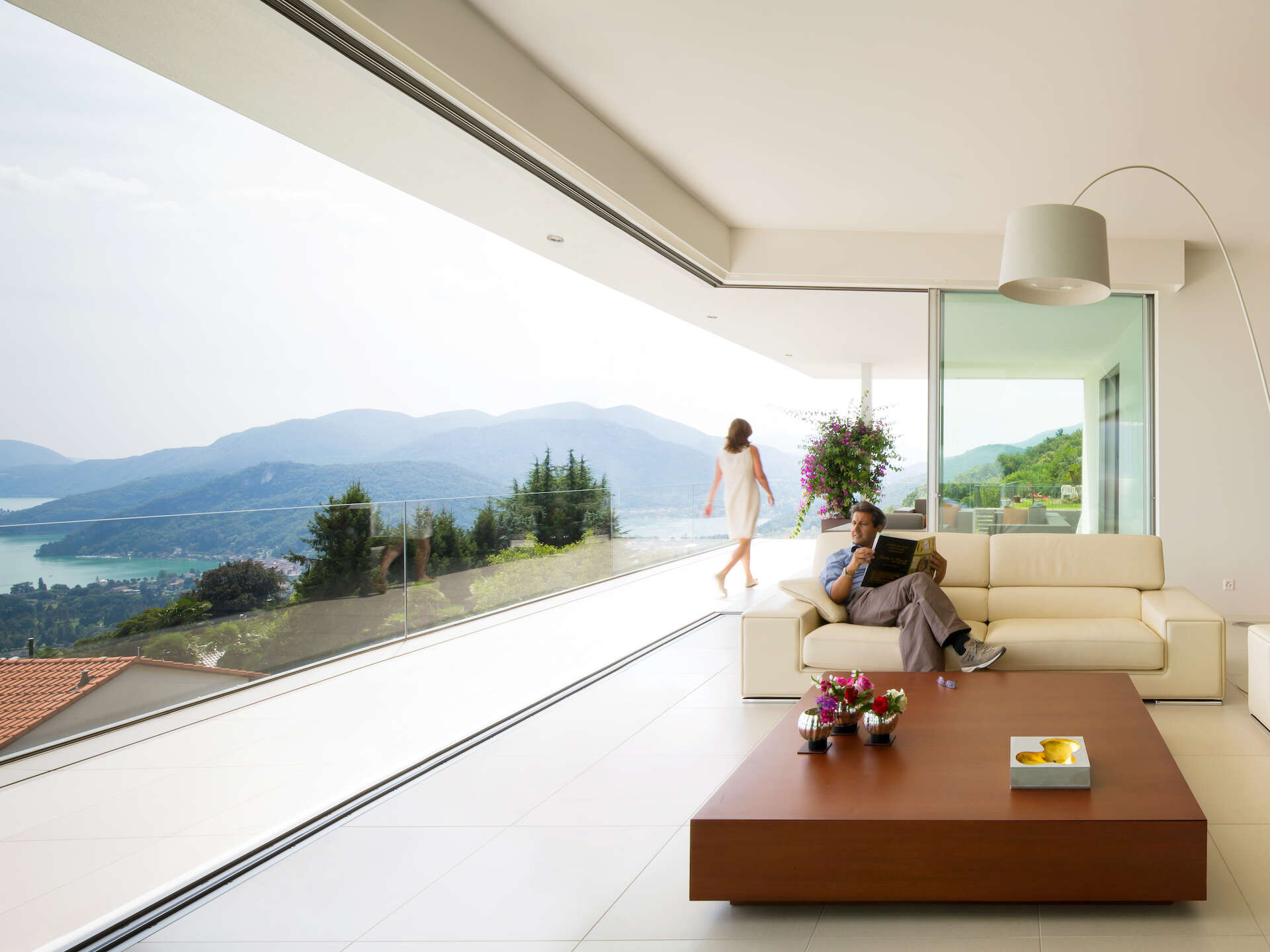
High-Performance Windows for New York City Projects
Windows New York City Projects Demand: The Compliance and Performance Baseline
Specifying windows for a New York City project is not a standard procurement exercise. The city’s layered regulatory environment — stacking the NYC Energy Conservation Code (NYCECC), which adopts and amends the IECC, against Local Law 97 carbon caps, Landmarks Preservation Commission requirements, and NFRC labeling mandates — means a window specification error can stall a project or generate costly change orders late in construction. For architects working on ground-up residential towers, gut-rehab multifamily buildings, or commercial mixed-use developments, understanding exactly what windows New York City regulations require is the foundation of every envelope decision.
How NYCECC and Local Law 97 Shape Window Specifications
The NYCECC is aligned with IECC Climate Zone 4A, which covers all five boroughs. Fenestration performance requirements under that classification are already demanding; Local Law 97 tightens the financial stakes further by imposing carbon intensity limits on buildings over 25,000 square feet, with penalty thresholds set to become substantially stricter in 2030. For architects, this means the window performance you specify today must be modeled against a building’s projected energy use intensity over a 10–20 year horizon, not just its permit-submission compliance checklist. Triple-glazed assemblies with insulated frames are increasingly the only practical path to meeting LL97 targets in high-glazing-ratio facades without overcorrecting on mechanical systems.
NFRC Labeling and ENERGY STAR Requirements
Every fenestration product specified on a New York City project must carry NFRC certification. NFRC labels provide independently tested, standardized performance data — the values your energy modeler and the DOB plan examiner will reference. ENERGY STAR certification under the Northern climate zone is an achievable threshold for most high-performance windows and doors in this market, but it represents a floor, not a target. For LL97-sensitive buildings, specifying products tested and certified to Passive House suitable or certified performance levels gives the project significantly more thermal headroom.
Landmarks and Historic Districts
Roughly 30,000 buildings in New York City sit within a designated historic district or carry individual landmark status. LPC review for window replacement or new infill openings requires documented material compatibility and, often, replication of historic profiles. German-made tilt-turn systems with narrow sightlines and custom RAL powder-coat finishes have been approved on LPC projects precisely because their sightline dimensions can be specified to match historic steel or wood profiles while delivering thermal performance that single- or double-glazed replacements cannot approach.
Windows New York City High-Rise Projects: Wind Load and Acoustic Considerations
New York City’s built density creates complex wind pressure profiles, particularly on buildings above 150 feet. ASCE 7 wind load calculations for midtown or downtown Manhattan sites routinely produce design pressures that standard residential window lines cannot meet. High-performance windows and doors sourced from German and Polish manufacturers with DP (design pressure) ratings of DP50 and above are a practical starting point for mid-rise and high-rise specifications; specific projects may require higher ratings depending on building height, exposure category, and facade geometry.
Acoustic Performance in Dense Urban Environments
Street noise in New York City is not an amenity. For residential towers near major arterials, subway lines, or flight paths, the acoustic separation between exterior and interior is a meaningful driver of occupant satisfaction and marketability. Triple-glazed assemblies with laminated outer panes and asymmetric glass configurations — for example, pairing different glass thicknesses to disrupt coincidence-frequency transmission — can achieve STC ratings well above what standard double-glazed units deliver. This is a specification conversation worth having with your acoustic consultant early in schematic design, not during submittal review.
Choosing the Right System Type for NYC Project Contexts
Not every window type is equally suited to every New York City building program. The table below maps common system types against typical NYC project contexts to help narrow the specification conversation.
| System Type | Typical NYC Application | Key Advantages | Considerations |
|---|---|---|---|
| Tilt-turn (inward) | Multifamily residential, gut rehabs, historic infill | Narrow sightlines, LPC-compatible profiles, excellent air/water tightness | Inward swing requires clear interior space; coordinate with furniture layouts |
| Fixed / picture | High-rise curtainwall punched openings, commercial lobbies | Maximum glazed area, no operational hardware to maintain | No ventilation; coordinate mechanical fresh-air strategy |
| Parallel-opening (turn-only) | Hotel rooms, senior housing, units with limited floor depth | Controlled ventilation, child-safety compliance, compact swing radius | Lower max opening area than full tilt-turn |
| Lift-and-slide / tilt-and-slide | Penthouse terraces, townhouse rear facades, duplex units | Large glazed panels, flush threshold options, minimal sightlines when open | Higher rough-opening tolerances required; structural sill detailing critical |
| Fixed storefront / commercial | Ground-floor retail, mixed-use base, office fit-out | High DP ratings, custom dimensions, thermally broken frames | Specify thermal break depth carefully for LL97 compliance modeling |
Manufacturing Sources: Germany, Italy, and Poland
LuxHaus sources exclusively from manufacturers in Germany, Italy, and Poland — and that origin matters practically, not just as a provenance claim. German-made tilt-turn and lift-and-slide systems dominate the high-performance multifamily and commercial segments because German fabricators have engineered for airtight construction and triple-glazed performance over decades; the hardware tolerances and frame geometries reflect that. Italian-crafted casement and sliding systems bring aesthetic refinement and custom finishing options that are well-matched to high-end residential and hospitality work where profile design is part of the architectural language. Polish-manufactured systems deliver Passive House suitable or certified thermal performance with cost efficiency that works for large-volume multifamily projects where per-unit economics are closely managed.
Windows New York City Procurement: Lead Times and Logistics
Factory-direct procurement from overseas manufacturers requires honest scheduling discipline. Standard production lead times from Germany, Italy, and Poland range from 10 to 18 weeks depending on system complexity, glazing specification, and current factory loading. Add 2–4 weeks for ocean freight and customs clearance. For New York City projects, factor in delivery coordination: street closures, crane lifts, and DOT permits for large glazing panels in dense urban sites add logistics complexity that a suburban project does not have. The right time to engage LuxHaus is at design development — not after the GC has issued a subcontractor bid package.
Thermal Bridging and Frame Detailing in NYC’s Climate Zone 4A
IECC Climate Zone 4A is a heating-dominated mixed-humid climate. The primary thermal risk in a New York City envelope is conductive heat loss through poorly insulated or thermally unbridged window frames, not solar gain — though summer cooling loads from east and west exposures are real. Specifying windows with multi-chamber PVC or thermally broken aluminum frames, combined with warm-edge spacer systems in the insulating glass unit, dramatically reduces the frame’s contribution to overall assembly heat loss. When these assemblies are installed with continuous air barriers and properly lapped into the wall system’s weather-resistive barrier, the performance gap between a simulated value and as-built reality closes substantially.
- Frame material matters: Multi-chamber uPVC and thermally broken aluminum profiles with polyamide breaks outperform standard aluminum in Climate Zone 4A.
- Spacer specification: Warm-edge spacers (TGI, swisspacer, or equivalent) reduce condensation risk and improve edge-of-glass performance — both relevant to NYC’s humid summer conditions.
- Installation interface: The window-to-wall junction is where most as-built performance degradation occurs. Require shop drawings that show the air-barrier and WRB lapping sequence before fabrication begins.
Energy Modeling and LL97 Compliance Strategy
For any NYC building subject to Local Law 97, the window specification is not separable from the energy model. Your MEP or energy consultant needs accurate, NFRC-certified performance data for the fenestration products before the energy model is finalized. Specifying Passive House suitable or certified assemblies gives the model the most favorable inputs, which in turn gives mechanical systems the smallest load to serve — reducing both capital cost and the long-term carbon penalty exposure the building owner faces under LL97’s escalating fine structure. Use Window IQ to run a preliminary energy savings calculation for your project before you finalize the fenestration budget.
- Submit NFRC-certified product data to your energy modeler at design development, not construction documents.
- Model window-to-wall ratio sensitivity: reducing WWR by 5–10% on north facades often delivers larger LL97 compliance gains than upgrading glazing specification alone.
- For mixed-use buildings, model residential and commercial zones separately — their fenestration compliance pathways under NYCECC differ.
Coordinating with the DOB Plan Examination Process
New York City Department of Buildings plan examiners are familiar with NFRC-labeled products and the NYCECC compliance pathway. What they are less accustomed to seeing — and what can generate review comments — are imported products with documentation formats that differ from domestic standards. LuxHaus provides full NFRC certification documentation, AAMA/WDMA testing reports where applicable, and product data formatted for DOB submission. If your project involves special inspections for fenestration installation, discuss the inspection protocol with your special inspection agency before shop drawing review begins.
- Confirm NFRC label availability for every product SKU specified — not just the product family.
- For LPC projects, prepare a separate submission package with material samples and profile drawings; DOB and LPC review tracks run in parallel, not sequentially.
- Coordinate rough opening tolerances with the structural engineer of record, particularly for large-format sliding systems with structural sill requirements.
Windows New York City: Specifying for the Long Term
New York City’s building stock turns over slowly. A window specified today on a multifamily building will be in service for 30 or 40 years, through multiple cycles of Local Law 97 compliance reviews, potential facade inspections under Local Law 11, and ownership changes. Specifying windows New York City projects actually need — high-performance, Passive House suitable or certified assemblies from manufacturers with established production histories and available replacement hardware — is the kind of decision that protects both the project and the architect’s professional relationship with the owner over time. For projects that also involve high-wind or coastal exposure, the technical requirements covered in Windows for HVHZ: What You Must Know provide a useful parallel framework for pressure rating and impact resistance specification logic.
Submit your plans to LuxHaus for a performance review and quote.