
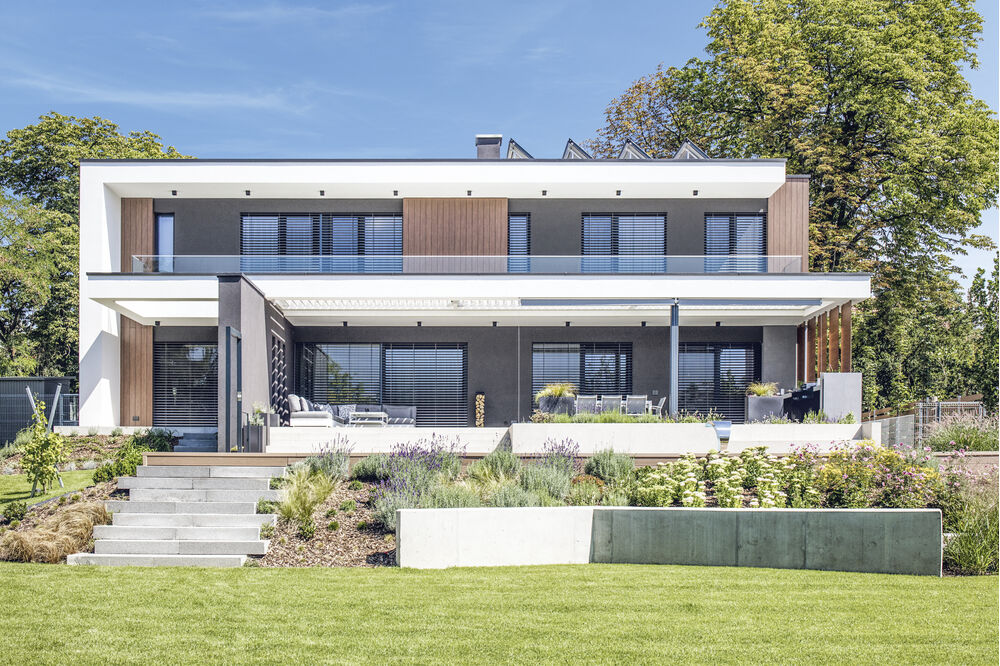
What Is a Tilt-and-Turn Window
A tilt-and-turn window is a European-engineered sash that delivers two distinct opening modes from one frame: rotating the handle 90° tilts the top inward for ventilation, while 180° swings the sash fully open like a casement door. LuxHaus supplies these high-performance windows from Germany, Italy, and Poland, with 5–7 multi-point locks, triple EPDM seals, and center-of-glass Ug values as low as 0.40 W/m²K.
Tilt and Turn Windows: Two Functions, One Frame
Tilt and turn windows are among the most versatile fenestration systems available to North American homeowners today — yet they remain widely misunderstood simply because they do not operate like any conventional American window type. A single hardware mechanism delivers two distinct opening modes from one sash: a tilt inward from the top for ventilation, and a full turn inward from the side like a casement door. That dual functionality is not a gimmick. It solves real problems around ventilation control, cleaning access, egress compliance, and weathertight performance — all within the same unit.
How Tilt and Turn Windows Actually Work
The operating logic is straightforward once you see it once. A single multi-point handle on the interior stile controls both modes by rotating through set positions.
- Handle horizontal (0°): Sash is locked. All multi-point hardware engages simultaneously around the perimeter — typically locking at four or more points depending on sash size.
- Handle pointing up (90°): Tilt mode. The bottom of the sash is fixed; the top pivots inward 8–12 inches. Air enters high, rain is largely shed, and there is no security gap at handle height.
- Handle pointing down (180°): Turn mode. The sash swings fully inward from the hinge side, opening like a door. Full-width ventilation and complete interior access to both glass faces.
The hardware that enables this is a scissor-action corner coupling system — a design refined over decades by German hardware manufacturers and now a standard feature on German-made tilt-turn systems, Italian-crafted casement hybrids, and Polish-manufactured multi-chamber uPVC units alike. The precision of the hardware is directly related to long-term reliability; cheaper clones frequently suffer from sash drop and latch failure within five to ten years.
Tilt and Turn Windows vs. Common American Window Types
To frame the difference concretely, consider how tilt and turn windows compare against the double-hung and casement types that dominate North American residential construction.
| Feature | Tilt and Turn | Double-Hung | Casement (US) |
|---|---|---|---|
| Ventilation control | Two modes: top-tilt or full-open | Upper and lower sash partial | Full open, single mode |
| Air seal when closed | Multi-point perimeter lock | Two friction points | One or two points |
| Interior cleaning access | Full — both faces reachable indoors | Tilt-in sashes (if equipped) | Exterior face requires ladder |
| Egress compatibility | Yes — turn mode meets IRC egress | Yes — upper or lower sash | Yes — full opening |
| Frame depth / thermal mass | Deep multi-chamber profile | Shallow, single-chamber typical | Moderate |
| Passive House suitable | Yes — with triple glazing | Rarely | Possible with upgrades |
Frame Materials for Tilt and Turn Windows
Tilt and turn windows are manufactured in three primary frame materials. Each has a distinct performance and maintenance profile worth understanding before specifying.
uPVC Multi-Chamber Profiles
Polish-manufactured systems and many German-made tilt-turn units use uPVC profiles with five to seven internal chambers. The chambers act as thermal breaks, slowing heat transfer through the frame independently of the glazing unit. uPVC requires no painting, does not corrode, and is dimensionally stable across a wide temperature range — relevant in Climate Zones 5 through 7 where overnight differentials can exceed 50°F. These systems are well suited to high-volume residential and light commercial projects where cost-per-opening is a primary driver.
Aluminum with Thermal Break
German-made tilt-turn systems in aluminum use a structural polyamide thermal break that separates the interior and exterior aluminum extrusions. The result is a slimmer sightline profile — valuable on contemporary facades where glazing-to-frame ratio matters — while still achieving thermal performance suitable for ENERGY STAR Most Efficient tiers. Aluminum profiles are the preferred specification for commercial-scale residential, mixed-use, and high-rise applications where sash weight and structural continuity are factors.
Timber-Aluminum Composite
Italian-crafted tilt-turn casements frequently pair interior hardwood with exterior aluminum cladding. The wood provides warmth aesthetically and excellent insulating properties at the frame; the aluminum handles UV, moisture, and impact on the exterior face. These systems carry a premium price point but are appropriate for heritage renovations, luxury custom builds, and projects targeting wellness certifications like the WELL Building Standard, where interior material quality and biophilic design are evaluated.
Glazing Options and Thermal Performance
Tilt and turn windows are routinely specified with triple-glazed insulated glass units (IGUs). Triple glazing uses three panes of glass with two gas-filled cavities — typically argon or krypton — combined with low-emissivity coatings to minimize radiant heat transfer. The result is an assembly that can be certified to Passive House Institute standards, which require verified performance well beyond what a standard ENERGY STAR label represents. For a detailed look at how glazing coatings interact with frame performance, this guide to Low-E glass is a useful starting point.
For homeowners comparing glazing tiers before specifying, the analysis in Triple Pane vs Double Pane Windows maps out the performance and cost trade-offs in practical terms. If you want to understand how the frame itself contributes to whole-window thermal performance — not just the glass — Understanding Window U-Factor explains the NFRC rating methodology that governs US product labeling.
Tilt and Turn Windows and Building Code Compliance
A common question from homeowners undertaking permitted work: do tilt and turn windows comply with IRC egress requirements for sleeping rooms? The answer is yes, provided the unit is sized correctly. IRC Section R310 requires a minimum net clear opening of 5.7 square feet (5.0 sq ft for ground floor), a minimum clear height of 24 inches, and a minimum clear width of 20 inches — all measured in the open position. In turn mode, a standard tilt-turn sash opens to nearly 90 degrees, easily meeting these dimensions in typical residential sash sizes of 28 inches wide and above.
IECC climate zone requirements for fenestration are met through NFRC-certified product ratings. Tilt and turn windows sourced from certified manufacturers carry NFRC labels showing the whole-window performance values your permit reviewer and energy code compliance documentation require. If your project targets Passive House certification or an ENERGY STAR Most Efficient designation, this overview of Passive House windows explains what the certification process entails and what to look for in product documentation.
Cleaning and Maintenance Advantages
One practical benefit of tilt and turn windows that does not get enough attention in specification conversations is cleaning access. In turn mode, both faces of the glass are accessible from inside the building. For upper-floor installations — second story and above — this eliminates the need for exterior ladders, scaffolding, or window-cleaning services to maintain glass clarity. For homeowners in urban or high-rise contexts, this is a meaningful long-term operating cost advantage.
- Exterior glass face: wiped from interior in turn mode
- Frame sill and drainage channels: accessible without removing sash
- Hardware lubrication: accessible at all lock points from inside
- Seal inspection: gasket perimeter visible without exterior access
Security Performance of Tilt and Turn Windows
Tilt and turn windows in tilt mode present a narrow top gap — typically under 12 inches — that is not wide enough to allow entry. More importantly, the multi-point locking system that engages in the closed position distributes load across the full sash perimeter rather than relying on a single central latch point. German-made hardware systems are tested to RC2 (Resistance Class 2) security standards under European test protocols, which require resistance to lever-attack attempts of three minutes or more. While North American residential codes do not mandate a specific forced-entry resistance class, RC2-tested hardware is a meaningful differentiator for homeowners in urban contexts or ground-floor applications.
Acoustic Performance
The same characteristics that make tilt and turn windows thermally efficient — deep frames, multi-chamber profiles, triple-glazed IGUs with laminated glass options, and continuous perimeter seals — also contribute to sound transmission loss. Projects in Climate Zone 4 and above near highways, rail corridors, or urban noise sources benefit from specifying units with laminated inner panes, which add mass and damping independent of the air gap between panes. High-performance tilt and turn windows regularly achieve STC ratings in the 40–50 range depending on glazing configuration, which is a substantial improvement over standard double-hung units.
Specifying Tilt and Turn Windows: Key Checklist
Before finalizing a tilt-turn specification, confirm the following with your supplier:
- NFRC label: Whole-window rating, not center-of-glass only
- Glazing configuration: Double vs. triple; gas fill; Low-E coating specification (position and type)
- Frame material and thermal break: uPVC chamber count, polyamide break width for aluminum, or timber species for composite
- Hardware certification: Multi-point lock count; security class if relevant
- Egress sash dimensions: Confirm net clear opening in turn mode against IRC R310 or local AHJ requirements
- Finish warranty: Paint or anodize warranty terms for aluminum; UV stability documentation for uPVC
- Lead time: Factory-direct imported units typically run 10–14 weeks from order to delivery; plan accordingly
Are Tilt and Turn Windows Right for Your Project?
Tilt and turn windows are not the right fit for every application. They open inward, which means interior clearance at the sash swing arc is a design constraint — furniture placement and window treatments must account for the turn-mode sweep. In tight spaces, the tilt position alone may be the primary ventilation mode used in practice. That said, for new construction, deep energy retrofits, and any project where long-term performance, low maintenance, and code-compliant egress are priorities, tilt and turn windows represent a specification with clear functional logic rather than aesthetic novelty. Use Window IQ to model the energy performance difference for your specific climate zone and project type before committing to a glazing specification.
Submit your plans to LuxHaus for a performance review and quote.
Frequently Asked Questions
How does the tilt-and-turn handle mechanism work?
A single interior handle controls both modes through three positions. At 0° (horizontal) the sash is fully locked, engaging 5–7 multi-point locks simultaneously around the perimeter. At 90° (pointing up) the top of the sash tilts inward 8–12 inches for ventilation. At 180° (pointing down) the sash swings fully inward from the hinge side for complete access and maximum airflow.
What are the maximum sash dimensions for a tilt-and-turn window?
LuxHaus tilt-and-turn sashes are engineered to a maximum size of approximately 48 × 92 inches. Beyond that dimension, the weight of the sash — particularly with triple-pane IGUs in 48–66 mm configurations — places excessive stress on the scissor-action corner hardware, which can lead to sash drop and long-term latch failure.
How do tilt-and-turn windows perform acoustically compared to standard American windows?
High-performance tilt-and-turn windows with triple EPDM seals and triple-pane glazing achieve STC ratings of 42–50+ dB, compared to 26–34 dB typical of standard domestic windows. That difference is meaningful in urban, flight-path, or highway-adjacent projects where noise intrusion is a comfort or code concern.
Are tilt-and-turn windows more expensive than standard American windows?
LuxHaus European tilt-and-turn systems are typically priced 10–20% below the premium domestic triple-pane tier on a per-opening basis, while delivering superior thermal and acoustic performance. Residential packages generally range from $100K to $500K depending on scope, and a preliminary project estimate is available within about a week.
What glazing options are available for tilt-and-turn windows, and how do they affect thermal performance?
LuxHaus offers 400+ glazing configurations across its tilt-and-turn range. Triple-pane IGUs in 48–66 mm units — roughly a 7% price delta over double-pane — achieve center-of-glass Ug values as low as 0.40 W/m²K and whole-window U-values as low as 0.14–0.18 Btu/h·ft²·°F, meeting ENERGY STAR v7.0 Northern Zone requirements of U ≤ 0.22. IGU seal life is rated at 50+ years versus 15–25 years for typical domestic units.